Augmented Reality: 3 steps away from transforming the tech world
The 3 enables before Augmented Reality becomes mainstream.
As one of the best know commentators on technology, Cal Newport has a unique perspective on the world around us.
His books (Deep Work, So Good They Can't ignore You, Digital Minimalism) are at the intersection of technology and society and deal with how the modern world is both blessed and cursed by the internet, social media and online communications.
His books and podcasts are a refreshing take on tech from a guy who knows a thing or two about computer science. He has published 7 books, been on the New York Times Best Sellers List and has over 4000 citations on his academic work.
In a recent podcast, Cal outlined his predictions for future tech trends, witth Augmented Reality (AR) being his top pick.
In his view, there are 3 significant but achievable barriers to overcome for AR to become mainstream. These will most likely be reached in the next 3-5 years and we could see the world of technology transformed when this happens.
#1 - Acceptable & Comfortable Wearables
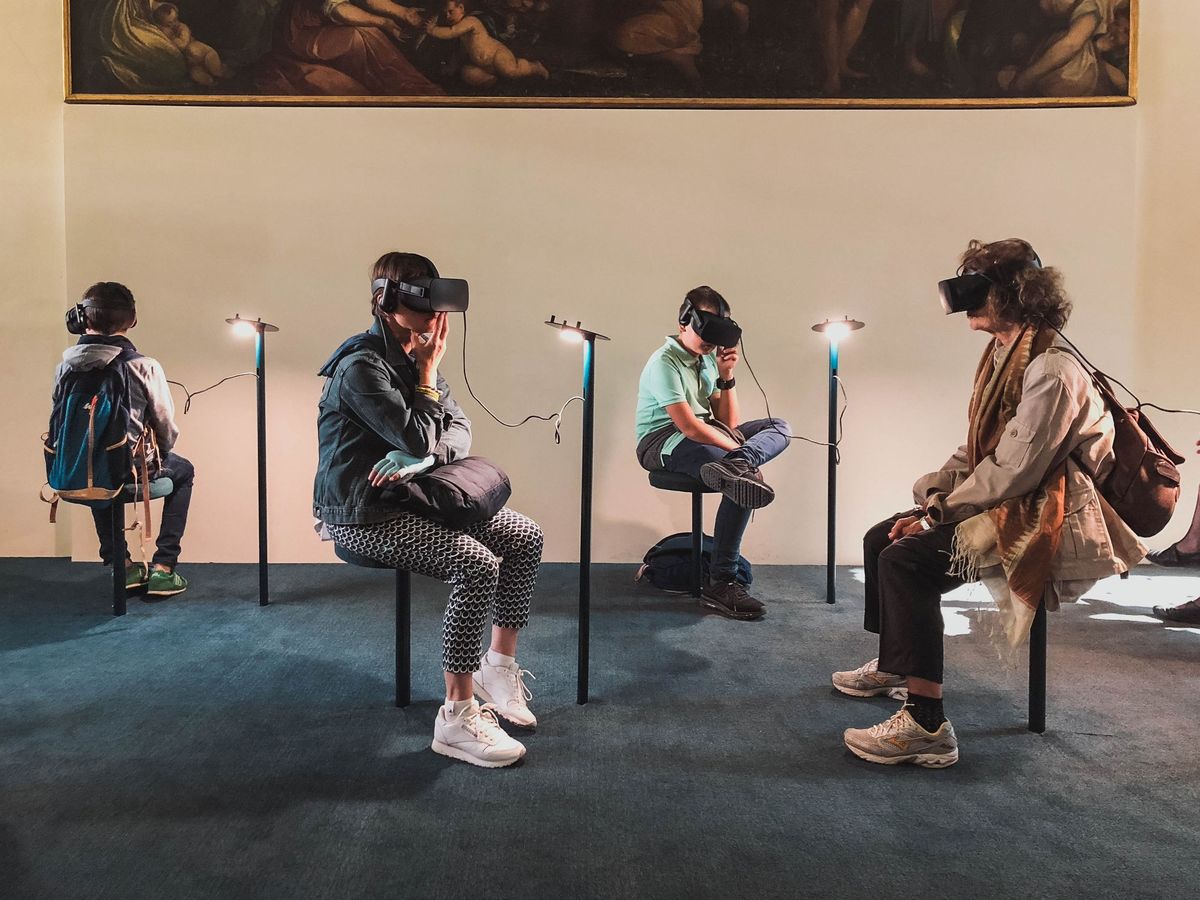
The moderate breakthrough success of Google Glasses did much for the principle of augement reality in the real world. But it cemented one clear fact: wearing glasses which contain computers is a real social faux pas.
"Nuns would genuinely say "Bless me Father for what I am about to do" and punch passers-by if they were wearing Google Glasses".
Although the hyperbole above it intended, it does speak to a kernal of truth.
- Wearing glasses makes you look pretentious beyond belief
- People felt slightly uncomfortable, not knowing if you are recording conversations, or focussing on something on screen rather than in person
- The glasses were a bit sci-fi and clunky (maybe aimed at the clientele?)
But these things can all be easliy overcome. The world of wearables has moved on hugely since the early 2010s. Smartwatches and fitbits are nearly universal (people ask why your watch isn't a smartwatch now).
Not long ago, the site of someone walking down the street talking to themselves would have been a warning sign to cross the road, but now we instinctively know that they are wearing wirehead phones and are on the phone. This shows how quickly we can change social norms and accept new technologies over the course of a few short years.
#2 - Superfast internet processing speeds
A limiting factor for wearables in general is how to be small and sleek enough to look cool, but have enough processing power to actually be useful. Streaming huge volumes of data and rendering graphics on a screen are heavy on chipset power.
The advances in cloud processing power and 5G wireless stream is leading us to belive that this "internet backbone" will be strong enought to provide the power needed to make the technology universally available.
#3 - Higher quality rendering
The benefits of augmented reality really appear when you consider that the three pieces above are in place.
- If users are comfortable wearing something like a sleeker looking Google Glass (maybe a group of friends, all wearing them - not as strange as first thought given the ubiquity of smartphones. Who would not bring one out now on a night out?).
- Super-fast cloud processing and wireless internet streaming give the hardware the backup it needs to be highly performing for the tasks the users give it.
- The ability to "render" or create a screen that is as high resolution as your phone, tv or laptop.
"Why would I buy a tv when (using augmented reality) I can just stretch a 72 inch on my wall ... and everone in that room seems it in the same place"
This could provide the ability to replace all of our familiar consumer tech devices (as camera owndership dropped off massively once phones included this feature perfectly well).
In Cal's opinion, this would be the end of Apple, Samsung, Sony and the rest of the consumer technology industry as we know it.
Conclusion
When we reach the end of the 2020s and look back at how far technologies have advanced, there is a good chance that augmented reality will be among the breakthroughs.
As supporing and enabling technologies advance at pace, the processing power is in place and the headsets become socially acceptable, we could see the end of the technology giants as we know them, as well as massive social and economic realities.